
Police and the Student Cultural Center (SKC) Admin took over the Freed SKC building

The Freed SKC initiative reports that, this morning, the police and SKC admin broke into the freed building of SKC in the Kralj Milan 48 street.
The Freed SKC initiative reports that, this morning, the police and SKC admin broke into the freed building of SKC in the Kralj Milan 48 street.

Despite the administration denying it, the destruction of the Belgrade fair complex has unofficially begun. Students have called on citizens to gather in front of Sajam on 17th of July, so they could, as they state, stop “the destruction of another symbol of our city.” During the action, police detained one student and two citizens.

Classes are formally starting, quotas have been approved, and entrance exams set. In some places, online classes are being met with boycotts while university students are met with repression. Still, the fight for autonomy of universities and a just society is not stopping with the instatement of online classes – it’s just transforming.

The magistrates’ court in Užice accepted the appeal of the defenders of the arrested and granted bail for the seven arrested last week in Užice

30 days of detention have been ordered for nine residents of the western city of Užice following protests during which citizens broke through the police cordon. Ahead of the St. Vitus protest on June 28, police detained eight other individuals and accused them of planning to potentially “undermining the constitutional order” – in other words, terrorism. Seven of them received the same sentence as those from Užice. In total, 16 people are currently behind bars, three of whom are students. Through this move, the Serbian government demonstrated its intent to again apply the methods it used in Novi Sad, where six activists were detained on similar charges in March 2025. However, as it turns out, the public’s response to such heightened repression and oppression is heightened resistance.

“No one is tired!” can be heard, almost by default, at every protest, blockade or organized action of civil disobedience across Serbia. Citizens, fueled by the student movement’s energy, use this slogan to make it clear to the current regime that no extreme heat, increased repression or eight months of relentless struggle will stop them. The question that remains is – how?

For a week, street blockades and other acts of civil disobedience have broken out throughout Serbia. In Belgrade, Niš, Novi Sad, and other cities, citizens have been blocking intersections and major roads to demand that the government hold snap parliamentary elections. In response, the police have been beating and arresting students and citizens alike – further fueling outrage and raising the stakes of a movement that shows no signs of backing down.
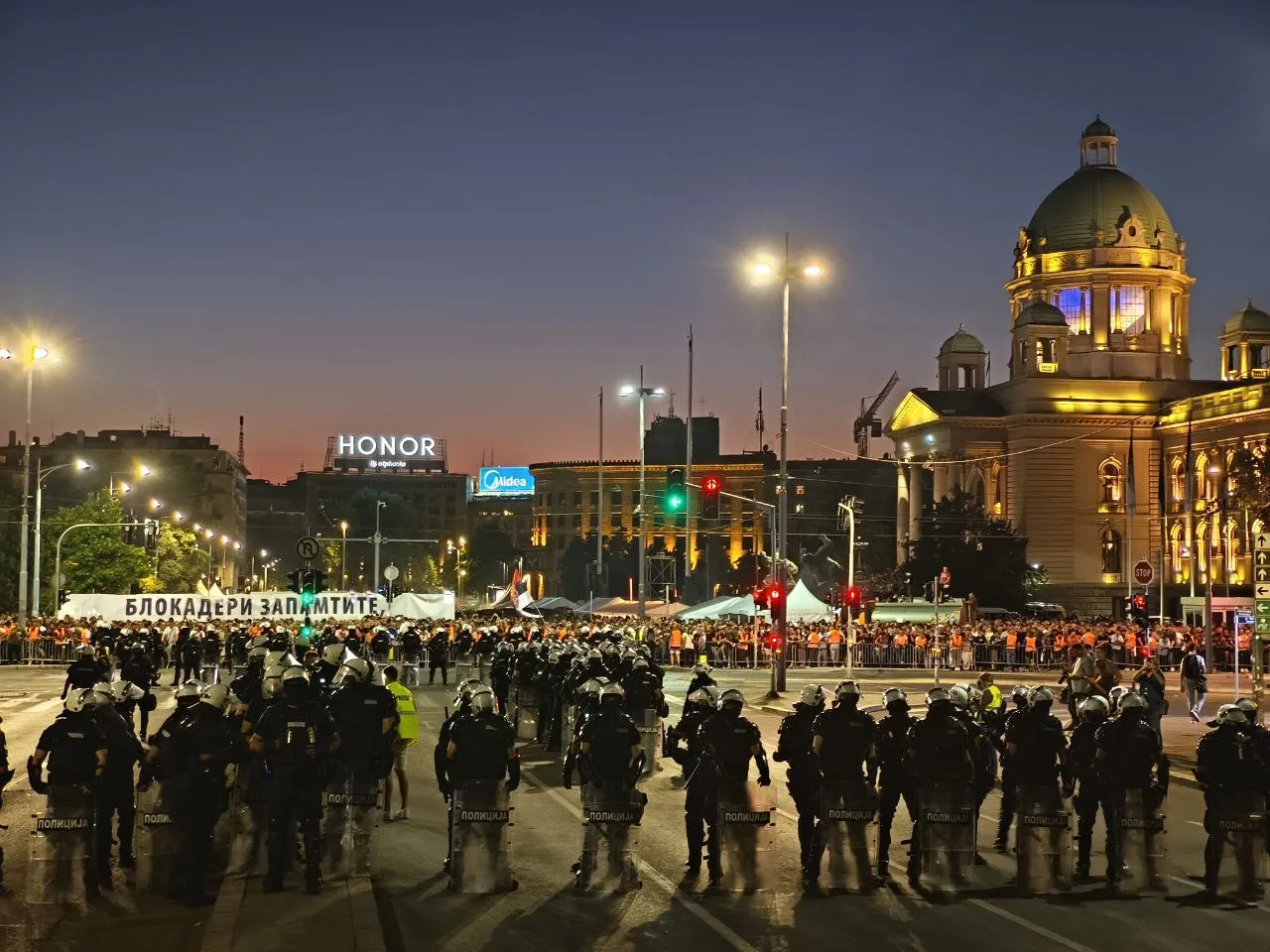
The student protest on St. Vitus Day, a significant national and religious holiday in Serbia, was held on Saturday in Belgrade. 140,000 people joined while supporters of the ruling Serbian Progressive Party gathered in their counter protest in Pionirski Park. Here’s a breakdown of what followed.
Mašina spoke with Palestinian writer Toufic Haddad ahead of his appearance at Palestine Day in Belgrade, which will take place on Sunday, June 22, at the Liberated Student Cultural Center (SKC) from 2 PM to 10 PM.
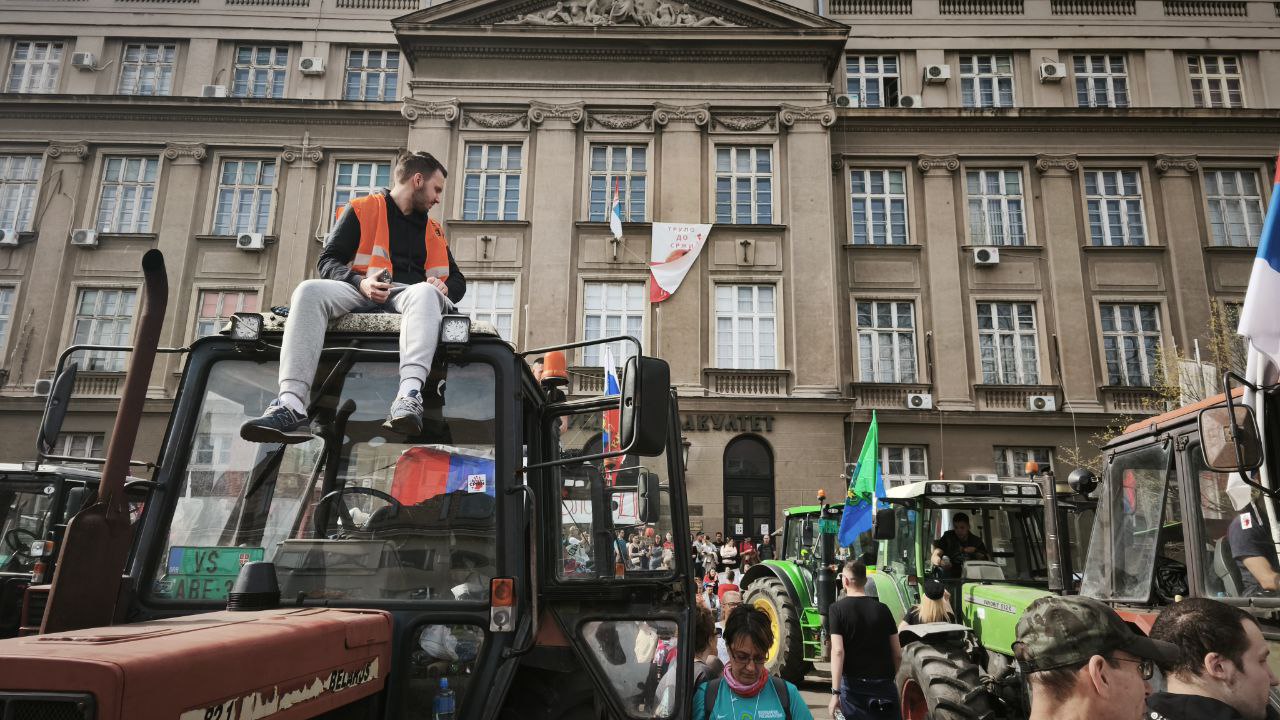
Labour and LGBT+ rights during student and popular protests in Serbia.

Students blockading their universities yesterday filed a criminal complaint against the President of Serbia, Aleksandar Vučić, for what they describe as an unauthorized visit to an intensive care unit on March 17, when he visited North Macedonian citizens who were severely burned and injured in a fire in the city of Kočani.

The recently appointed Prime Minister of Serbia Dr. Đuro Macut and the Rector of the University of Belgrade Dr. Vladan Đokić, have reached a series of verbal agreements regarding the continuation of work and the “preservation of the integrity and credibility” of the University of Belgrade. Plans are in now place to hold entrance exams … Read more
In a video published by students blockading universities, the Rector of the University of Belgrade and other professors stated that, for the first time in 200 years, a decision has not yet been made regarding the enrollment of a new generation of students.
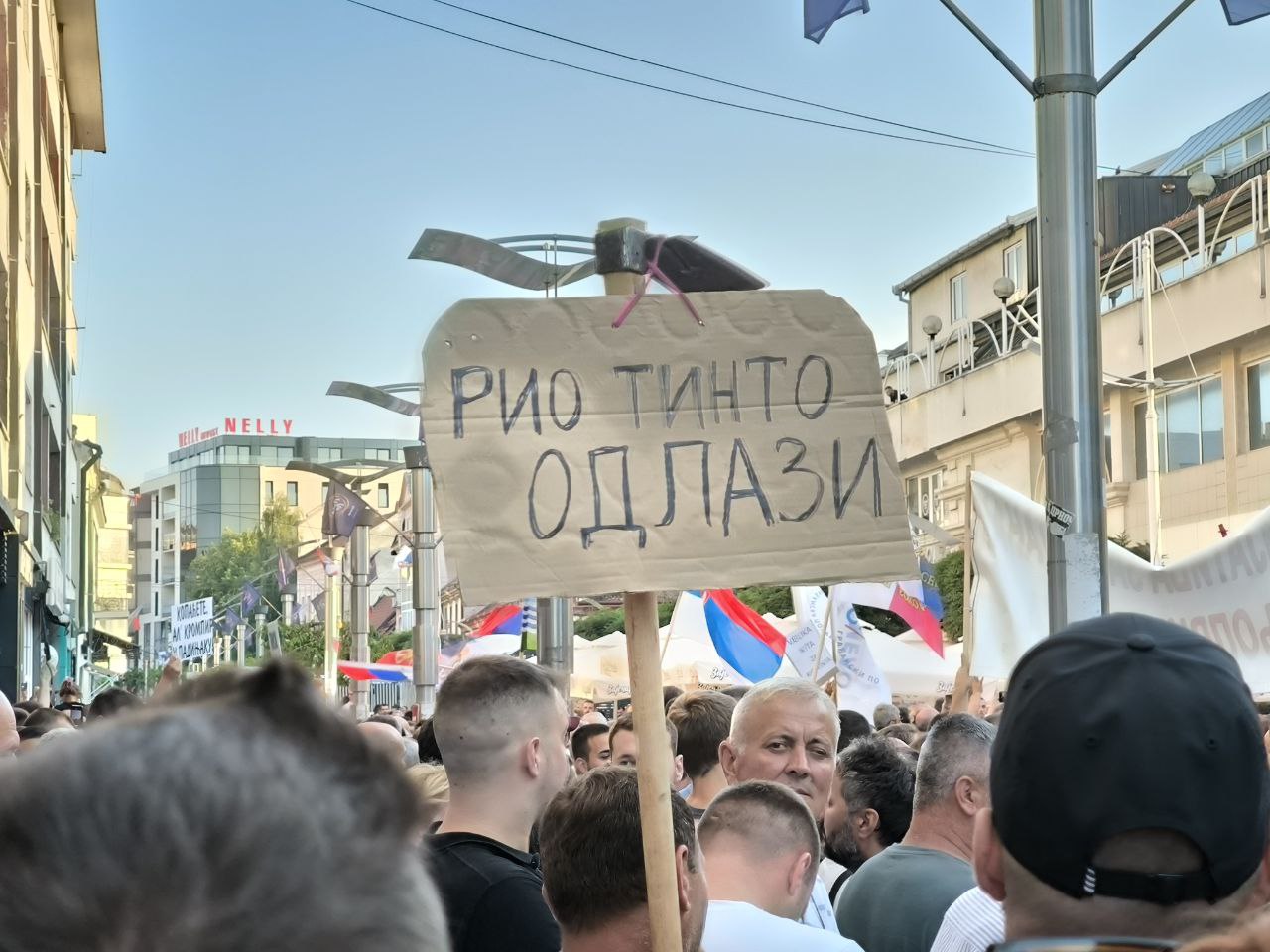
The European Commission has designated Rio Tinto’s proposed lithium mine in Serbia’s Jadar Valley as strategically important for the European Union—a move that will spur various forms of support for the project’s implementation.
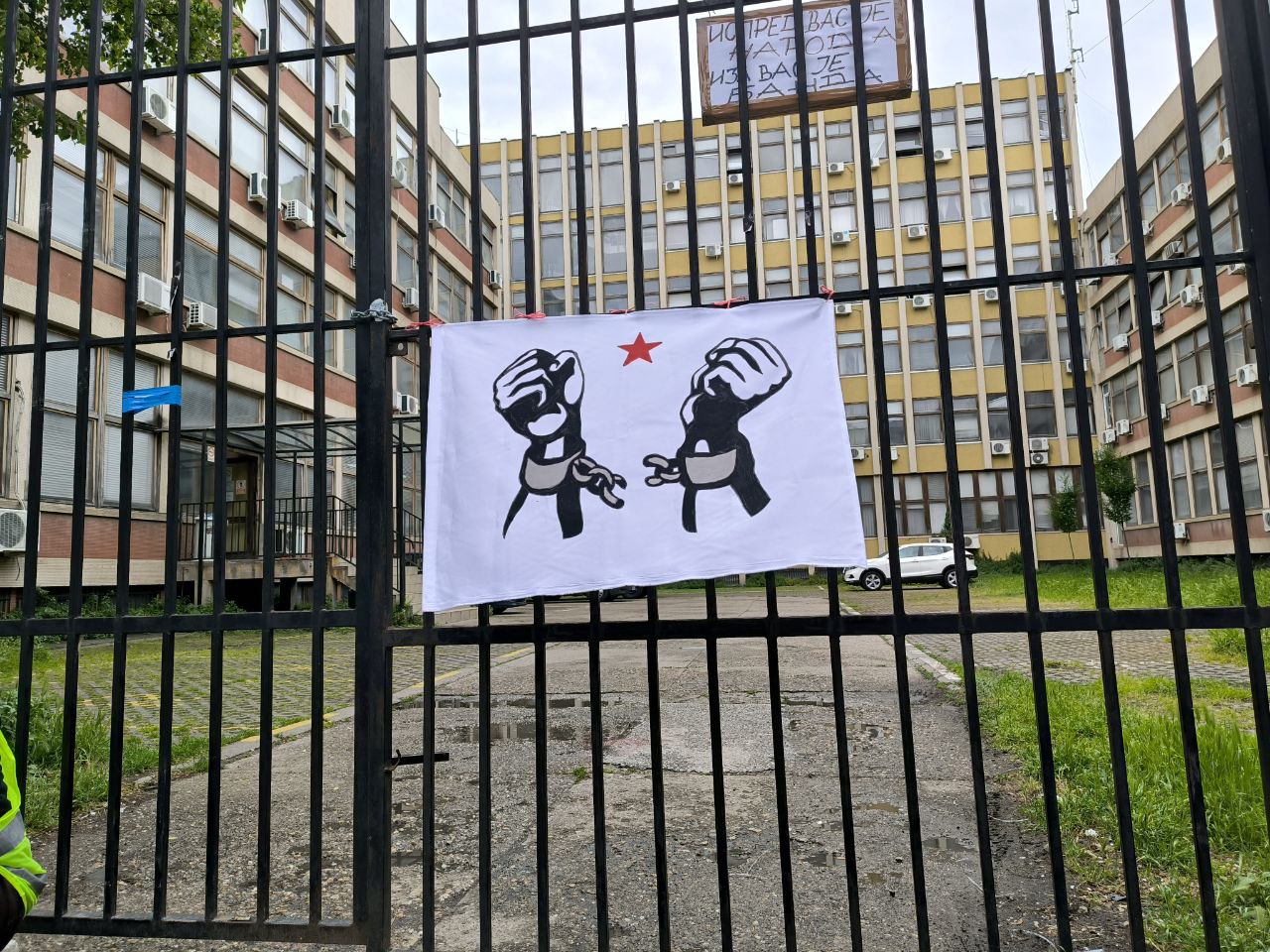
The Higher Court in Novi Sad has again extended the detention of activists Davor Stefanović, Mladen Cvijetić, and Srđan Đurić by another 30 days, after they have already spent two full months in prison. Davor Stefanović was beaten in prison and has a broken nose, according to reports.
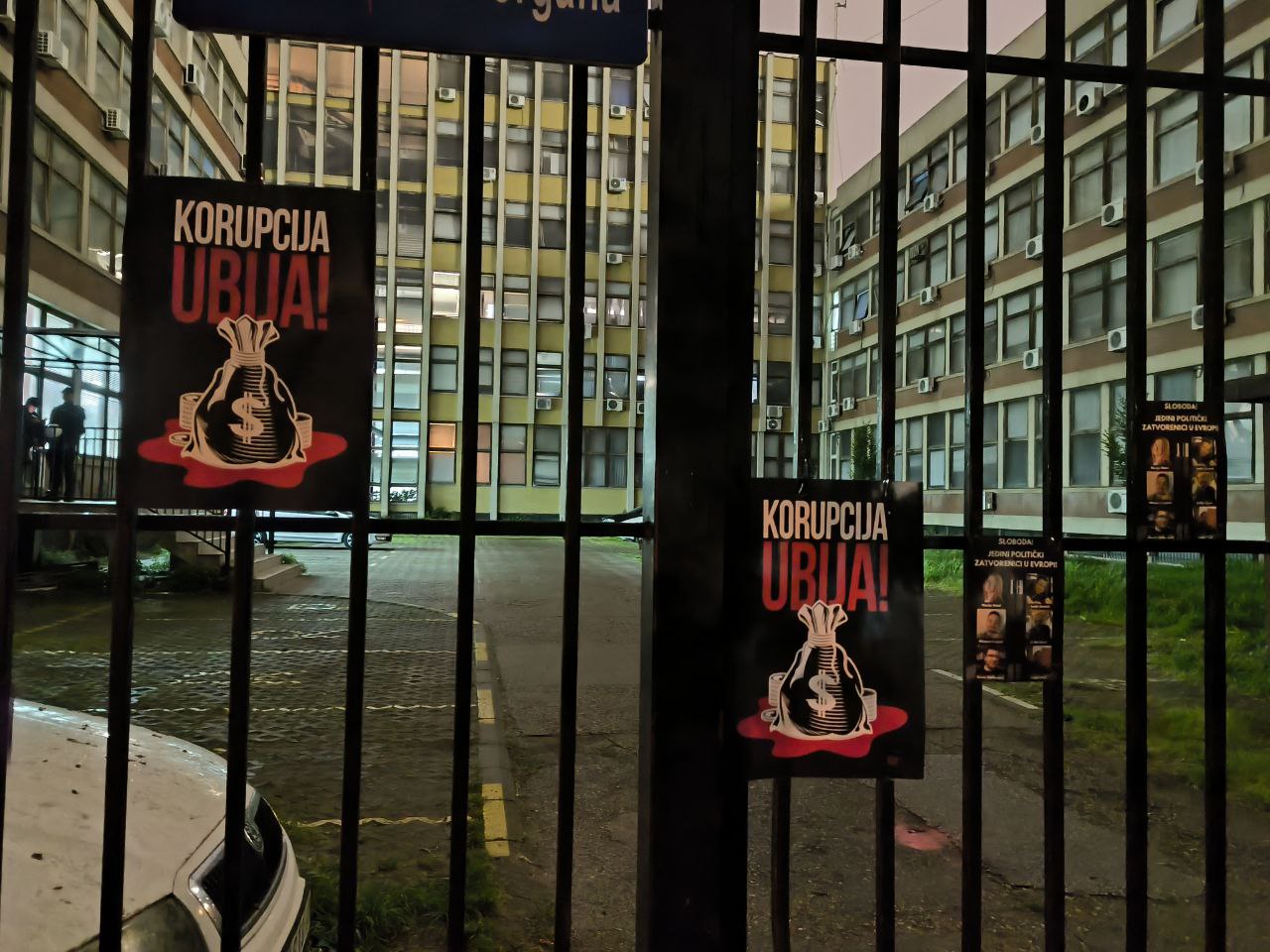
Today, the defense’s appeal to free the six imprisoned activists was officially accepted by the court and will now be considered. Organizers gave court employees unimpeded access to enter the building until 11 a.m. to perform their duties, but employees were ordered by superiors to exit the building by 10:30 a.m.
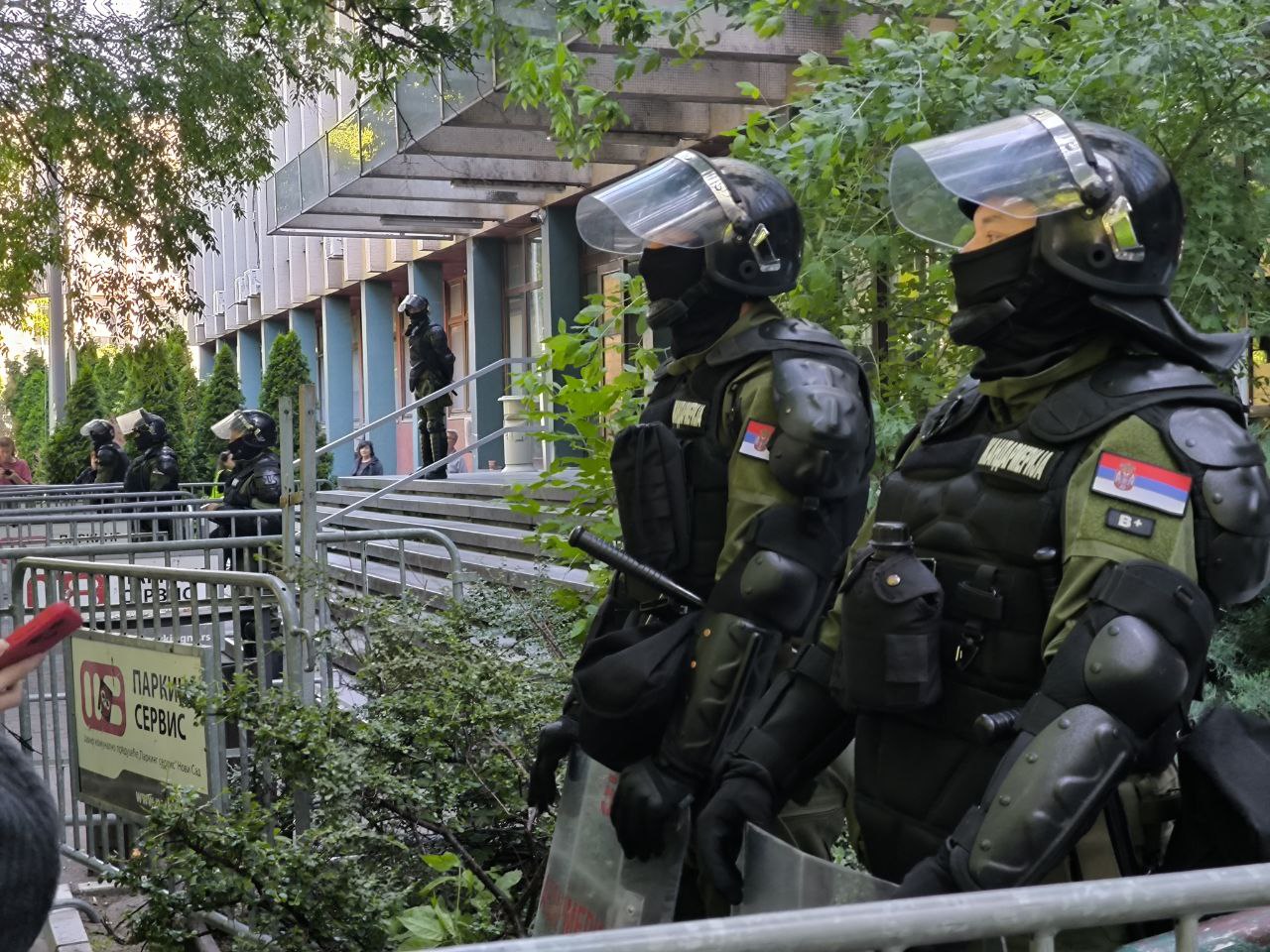
On May 13, the Higher Court in Novi Sad announced it was extending the detention of six members of the Free Citizens Movement and the activist organization “Stav” by 30 days.

Is the worker of the 21st century even a worker? Or have they become a number, a resource, a benefit user, an identification card? In the private sector the worker is no longer a political subject. They are reduced to a function within a system that teaches them to be lucky to have a job at all. The right to voice discontent? It exists today only as a clause in the employment contract, right next to the one about loyalty to the company.

Students and citizens spent the last two nights blockading the public broadcaster, Radio Television of Serbia (RTS), in downtown Belgrade. Since April 14, students had blockaded several broadcasting centers in Belgrade and Novi Sad to call for a new bid by the Regulatory Authority for Electronic Media (REM) or for RTS to be shut down due to its inaccurate reporting on the current uprising in Serbia.
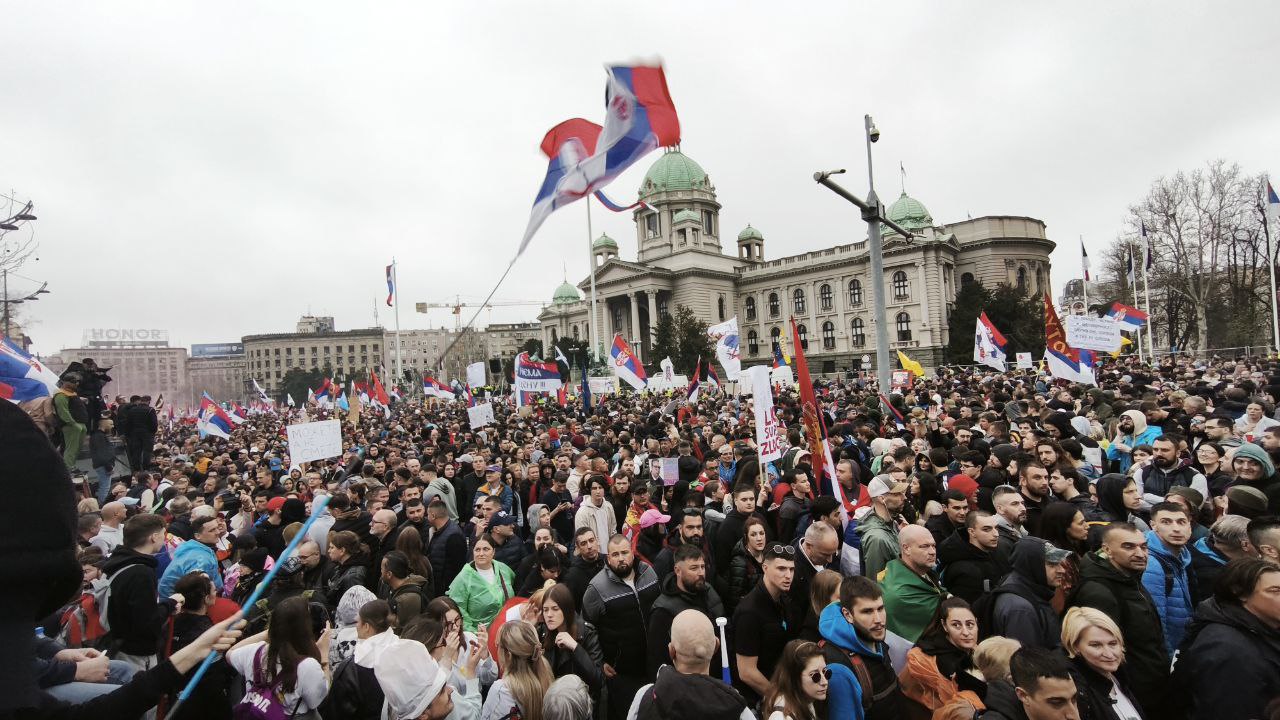
Following the largest student-led protest in Serbia, that took place in Belgrade on March 15, the question about “what’s next” is on the agenda. The fight continues, and with it, discussions about “systemic” change: beyond ethno-nationalist anti-systemic narratives or liberal calls of an expert government, the class conflict, which arises from the concreteness of the student struggle, i.e.: for a (self-organized) society as a political community, should be emphasized.

Students blockading faculties at the University of Novi Sad announced a daring and exhausting journey of over 1,000 kilometers to deliver documentation on human rights violations in Serbia to the European Court of Human Rights.